Would You Reasonably: The Filmmaking Revolution of the Digital Age
Associated Articles: Would You Reasonably: The Filmmaking Revolution of the Digital Age
Introduction
With enthusiasm, let’s navigate by means of the intriguing matter associated to Would You Reasonably: The Filmmaking Revolution of the Digital Age. Let’s weave fascinating data and supply recent views to the readers.
Desk of Content material
Would You Reasonably: The Filmmaking Revolution of the Digital Age

The hum of a movie digital camera, the hushed anticipation on set, the meticulous choreography of a scene – these are the hallmarks of conventional filmmaking, romanticized in numerous documentaries and celebrated in cinematic historical past. But, the rise of digital expertise, and particularly the web, has irrevocably altered the panorama. At the moment, a burgeoning query hangs within the air for aspiring filmmakers: would you quite movie historically, with all its complexities and price, or embrace the democratizing energy of on-line filmmaking? This text delves into the multifaceted concerns of this “Would You Reasonably” state of affairs, analyzing the benefits and downsides of each approaches.
Conventional Filmmaking: The Legacy of Craft and Management
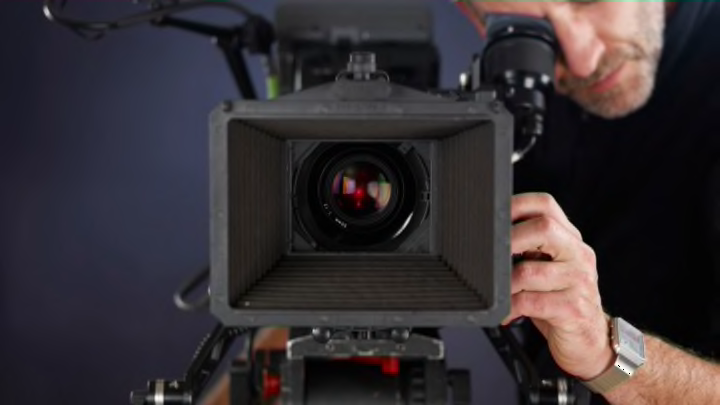
Conventional filmmaking, encompassing taking pictures on movie inventory and using established studio infrastructure, retains a sure mystique. It is a course of steeped in historical past, demanding a mastery of technical abilities and a big monetary funding. This very funding, nonetheless, usually interprets into the next stage of manufacturing worth.
Benefits:
- Superior Picture High quality (Traditionally): For years, movie inventory was synonymous with superior picture high quality, boasting a richer depth, wider dynamic vary, and a singular grain construction that digital struggled to copy. Whereas digital expertise has considerably narrowed this hole, many filmmakers nonetheless consider movie gives an unparalleled aesthetic.
- Established Workflow and Experience: A long time of expertise have constructed a sturdy infrastructure round conventional filmmaking. From skilled digital camera operators and gaffers to established post-production homes, a community of expert professionals exists to assist the method.
- Tangible Asset: Movie negatives signify a bodily archive of the work, providing a way of permanence and a backup towards digital corruption or loss.
- Status and Credibility: In sure circles, movies shot on movie nonetheless carry a sure weight of status, signifying a dedication to craftsmanship and the next manufacturing funds. This may affect distribution alternatives and viewers notion.
Disadvantages:
- Excessive Price: Movie inventory, processing, and gear leases are considerably dearer than their digital counterparts. This usually necessitates securing substantial funding, limiting entry for unbiased filmmakers.
- Restricted Takes: The price of movie inventory restricts the variety of takes a director can afford, demanding the next stage of pre-production planning and on-set effectivity.
- Put up-Manufacturing Challenges: Movie requires specialised processing and scanning, including complexity and price to the post-production section.
- Accessibility Barrier: The excessive price and specialised information required make conventional filmmaking inaccessible to many aspiring filmmakers.
On-line Filmmaking: The Democratization of Cinema
The rise of available digital cameras, reasonably priced enhancing software program, and highly effective web platforms has revolutionized filmmaking. On-line filmmaking, encompassing the creation and distribution of movies primarily by means of digital means, has democratized the artwork type, empowering people and small groups to create and share their work globally.
Benefits:
- Low Price: Digital cameras, enhancing software program, and on-line distribution platforms are considerably extra reasonably priced than conventional filmmaking gear and processes. This permits for experimentation and creation with minimal monetary danger.
- Accessibility: Anybody with a smartphone and primary enhancing abilities can create and share movies on-line, breaking down the obstacles to entry for aspiring filmmakers.
- Fast Iteration: The benefit of taking pictures and enhancing digitally permits for speedy iteration and experimentation. Errors could be simply corrected, and inventive concepts could be examined rapidly.
- International Attain: On-line platforms present speedy entry to a worldwide viewers, bypassing the normal gatekeepers of distribution. This permits filmmakers to succeed in audiences they won’t have entry to in any other case.
- Group and Collaboration: On-line platforms foster vibrant communities of filmmakers, providing alternatives for collaboration, suggestions, and studying.
Disadvantages:
- Perceived Decrease High quality (Traditionally): Early digital cameras produced lower-quality photos in comparison with movie. Whereas expertise has vastly improved, some nonetheless understand digital as inferior, significantly relating to dynamic vary and coloration depth.
- Technical Challenges: Digital filmmaking nonetheless requires a stage of technical proficiency, although the educational curve is mostly much less steep than conventional filmmaking.
- Competitors: The benefit of entry into on-line filmmaking ends in a extremely aggressive panorama, making it difficult to face out.
- Copyright and Piracy: Distributing movies on-line exposes them to the danger of copyright infringement and piracy, necessitating cautious authorized consideration.
- Algorithmic Bias: The algorithms of on-line platforms can affect the visibility and attain of movies, doubtlessly limiting publicity for sure sorts of content material or creators.
The Hybrid Strategy: Mixing the Better of Each Worlds
More and more, filmmakers are adopting hybrid approaches, leveraging the benefits of each conventional and on-line strategies. This may contain taking pictures on digital cameras however incorporating stylistic decisions impressed by movie aesthetics, or utilizing on-line platforms for distribution however using skilled post-production strategies. This blended strategy permits for inventive flexibility and environment friendly useful resource administration.
Conclusion: A Query of Priorities
The "Would You Reasonably" query of conventional versus on-line filmmaking does not have a single proper reply. The optimum alternative relies on the filmmaker’s particular person priorities, sources, and inventive imaginative and prescient. Conventional filmmaking gives a legacy of high quality, management, and status, however comes with a excessive price and vital obstacles to entry. On-line filmmaking democratizes the artwork type, providing accessibility, low price, and world attain, however could current challenges by way of perceived high quality and competitors. The way forward for filmmaking seemingly lies in a continued evolution of those strategies, with filmmakers selectively adopting parts from each approaches to attain their inventive targets and attain their meant audiences. Crucial issue stays the story itself – the ability of the narrative to transcend the technical limitations of the chosen medium. In the end, the very best movie is the one which tells its story successfully, no matter whether or not it was shot on movie or a smartphone.





Closure
Thus, we hope this text has offered helpful insights into Would You Reasonably: The Filmmaking Revolution of the Digital Age. We recognize your consideration to our article. See you in our subsequent article!